
Structural actions
Expert Centres for treatment-resistant depression
- Period
- 2026 > 2028
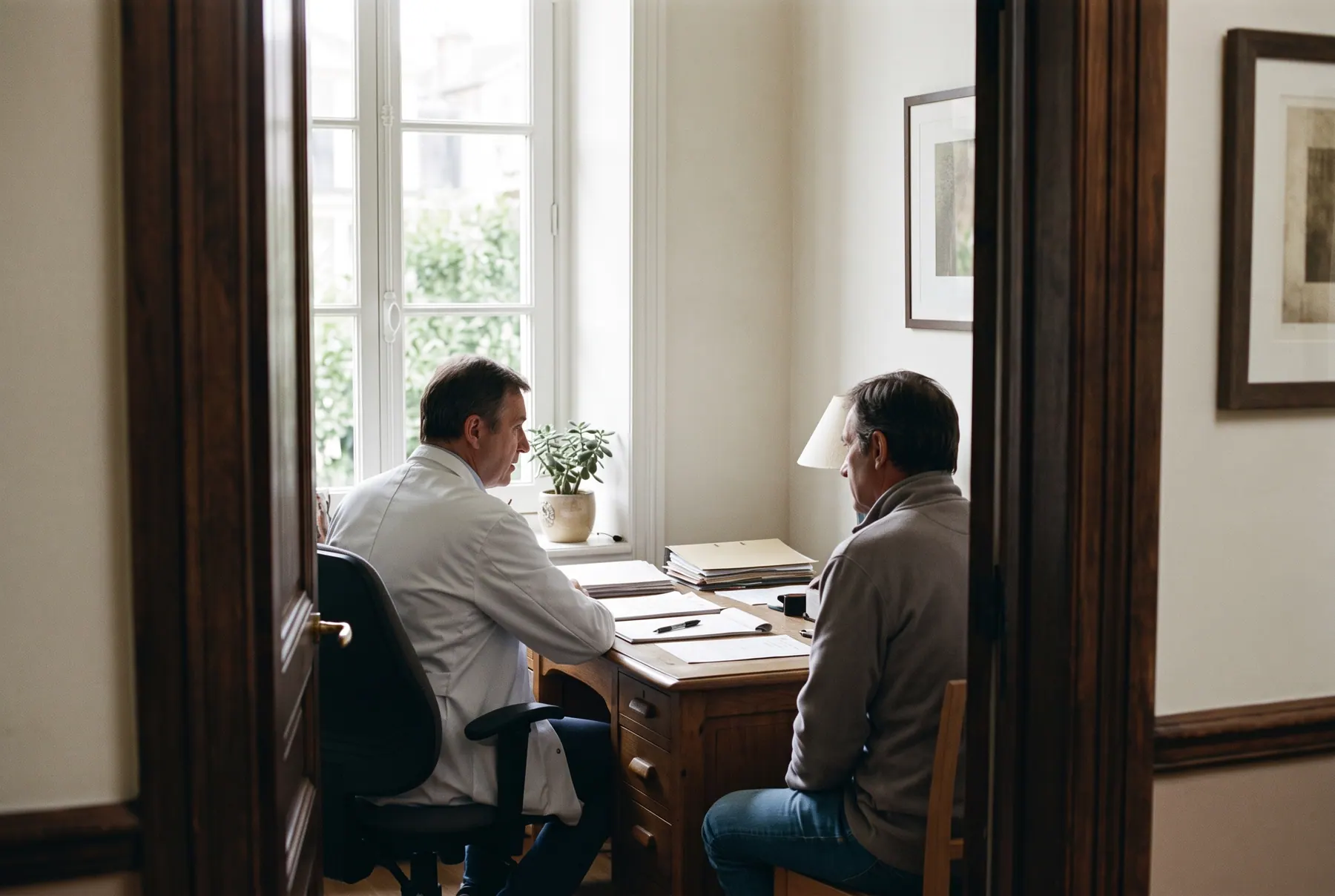
The Expert Centres dedicated to treatment-resistant depression offer patients referred by their psychiatrist a personalised diagnostic assessment by multidisciplinary teams, to refine the diagnosis and guide treatment.
Donate to this project
This project is only partly funded today. With your gifts, precision psychiatry can move the cure of mental illness forward. Individual or company, every contribution counts: together, let’s make this hope a reality.
The challenge
- Depression, which affects nearly one French person in five, is still often poorly treated, especially in its most severe forms. To address this, Fondation FondaMental proposes to support the development of regional Expert Centres, to ensure fair access to specialised, personalised assessment.
- Depression is one of the most common and disabling illnesses: it affects nearly one French person in five during their lifetime and is the leading cause of disability worldwide. In France, it lies at the heart of many situations of psychological distress, social exclusion, and breakdowns in working or family life.
- Despite its scale, access to specialised assessment remains very unequal from one region to another. Yet the most severe, complex or treatment-resistant forms require expert, multidimensional and personalised care, which mainstream care services cannot provide. It is now urgent to guarantee all patients coordinated, specialised referral care, everywhere in the country.
- It is with this in mind that Fondation FondaMental proposes to support, region by region, the development or consolidation of Expert Centres dedicated to treatment-resistant depression.
Our strengths
- A network of 15 “depression” Expert Centres already operating in France, but never funded by the public authorities, unlike the other networks coordinated by the Foundation (bipolar disorders, schizophrenia, autism spectrum disorders without intellectual disability).
- Level 3 referral facilities, integrated into public hospitals, offering a specialised and personalised assessment for patients living with severe, complex or treatment-resistant depression.
- A typical pathway: a long pre-diagnostic consultation (3 hours); a day-hospital assessment (1.5 days); a feedback consultation, with recommendations sent to the patient’s GP.
- Multidisciplinary teams (psychiatrist, psychologist, neuropsychologist, nurse…) using standardised diagnostic tools and sharing data in a national database.
- One-off expert services, without long-term follow-up, complementing local care.
- A recognised and effective model, strongly endorsed by patients, referring doctors and the health authorities.
- Contribution to clinical research and to the continuing training of healthcare professionals.
Objectives
- The aim is to secure long-term funding for your region in order to consolidate the existing Expert Centre and keep it running over the long term, if one is already in place, or to create a new centre in regions not yet covered.
- A long-term commitment is essential: multi-year support of at least 3 years makes it possible to root the centre in its region, stabilise the teams and maximise its impact. Without this visibility over time, hospitals cannot commit to recruiting the professionals the centre needs to operate.
The Expert Centres on the map
On medical referral only
Expert Centres see people referred in writing by a psychiatrist (or, depending on the centre, by a GP). They do not take appointments directly: talk to your doctor first.
How to be referred →Your location stays on your device: it is neither sent nor stored.
55 expert centres shown
Pinch to zoom on a touchscreen, scroll or use the buttons on a desktop, drag to move around. The full list is below the map and works without it.
Project leaders
Pierre-Michel Llorca
PU-PH (university professor and hospital practitioner), Clermont-Ferrand; Director of Care, Fondation FondaMental
Antoine Yrondi
Head of the Department of Psychiatry and Medical Psychology, Toulouse University Hospital
Become a sponsor of the project
By funding this project, you make concrete progress possible for the people affected and those close to them.
- Your contribution will be proof of your commitment, which you can highlight in internal and external communication and for your employer brand.
- Fondation FondaMental will acknowledge your support on all its communication materials and in all its publications, in France and internationally. Our team also offers information meetings for your employees, your clients and, more broadly, all your stakeholders.
- Added to this is the tax advantage provided for this type of sponsorship, which Fondation FondaMental, given its status, can offer you.
- These counterparts are proposals and can be added to.
News, podcasts and conferences on this subject
In the press
Research and studies
Other projects to support
Structural actions
Communication and mobilisation actions
Informing people about mental illness, tackling stigma and mobilising the public, decision-makers and the media: podcasts, conferences, advocacy, newsletter and campaigns.
See the projectInternational cooperation
Lancet Commission on schizophrenia
Launched in May 2026 by The Lancet, with the support of Fondation Sisley-d’Ornano and Fondation FondaMental, this international commission co-chaired by Professor Marion Leboyer (France) and Professor Michael Berk (Australia) aims to redefine how psychotic disorders are understood, diagnosed and treated, and to tackle stigma.
See the projectStructural actions
FondaMental Alliance
The Alliance brings together a community of professionals committed to advancing research in precision psychiatry: collaboration, knowledge sharing and project development, with free individual membership.
See the project
Become a donor